Quartz is among the most widespread minerals, constituting 12% of the crust by volume. Quartz is so common because it is composed of oxygen and silicon, which are by far the most important chemical elements in the crust. It contains no rare chemical elements which could limit its growth. Hence, we see it often in igneous rocks, especially those igneous rocks that contain lots of silicon (granite, rhyolite, pegmatite, granodiorite, etc.). The most important igneous rocks that contain little or no quartz are mafic/ultramafic (gabbro, basalt, peridotite) and feldspathoid-bearing rocks (nepheline syenite, for example, but such rocks are relatively rare).
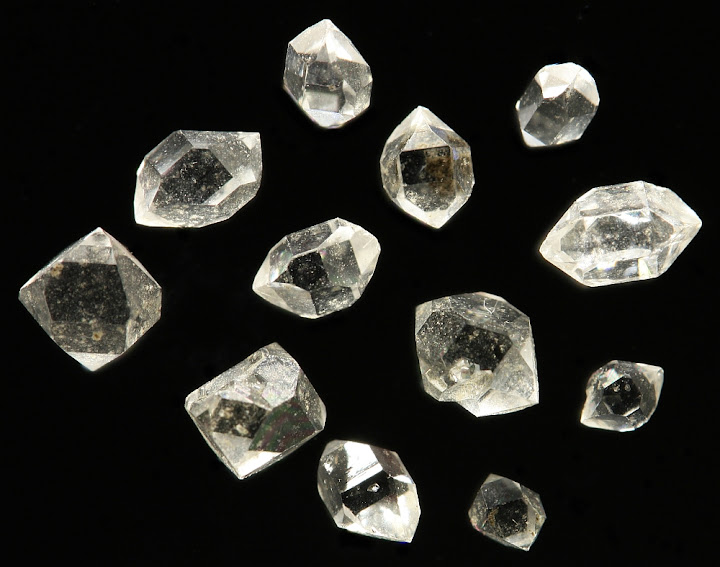
Quartz crystals (Herkimer diamonds) found from cavities in dolomite rock. New York State, USA. Width of view 10 mm.
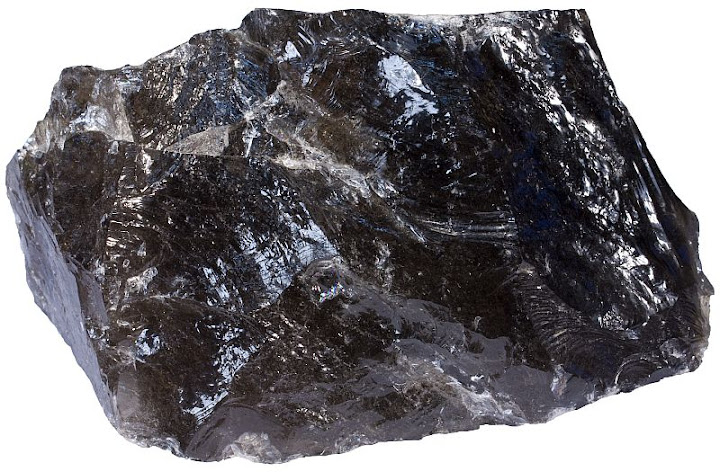
This mineral has no cleavage. Hence, it has a smooth conchoidal fracture and easily recognizable luster. Width of sample is 11 cm.
It resists weathering very well and it is also physically hard. Thus, we very often see it in sediments. It is the most important sand-forming mineral. It is more voluminous in sand than all other minerals combined. Continental sand is mostly composed of this mineral. Volcanic islands in the middle of oceans (Hawaii, The Canary Islands) are one of the few places where it is not among the sand-forming minerals because the generally basaltic volcanic material usually does not contains it.
It is also widespread in metamorphic rocks because in relatively pure form it is not afraid of alteration, high temperature, and high pressure. sandstone becomes quartzite in the course of metamorphism. This is in stark contrast to pelitic (clay-rich) rocks which go through very complicated series of mineral reactions.
Quartz is also the most important hydrothermal mineral, filling cracks in the crust with many other and often economically important minerals.
Quartz in sand is usually white or transparent and very often rounded because its grains might be very old, sometimes even billions of years. It has no own specific color because it lacks chromophore elements. It could have almost any color, depending on impurities. Amethyst, for example, is a violet variety that contains a small amount of iron. It is often easy to identify in rocks because it lacks cleavage (no planar broken surfaces) and has specific greasy-looking luster. Note that crystal faces are different, they have vitreous (glassy) luster.
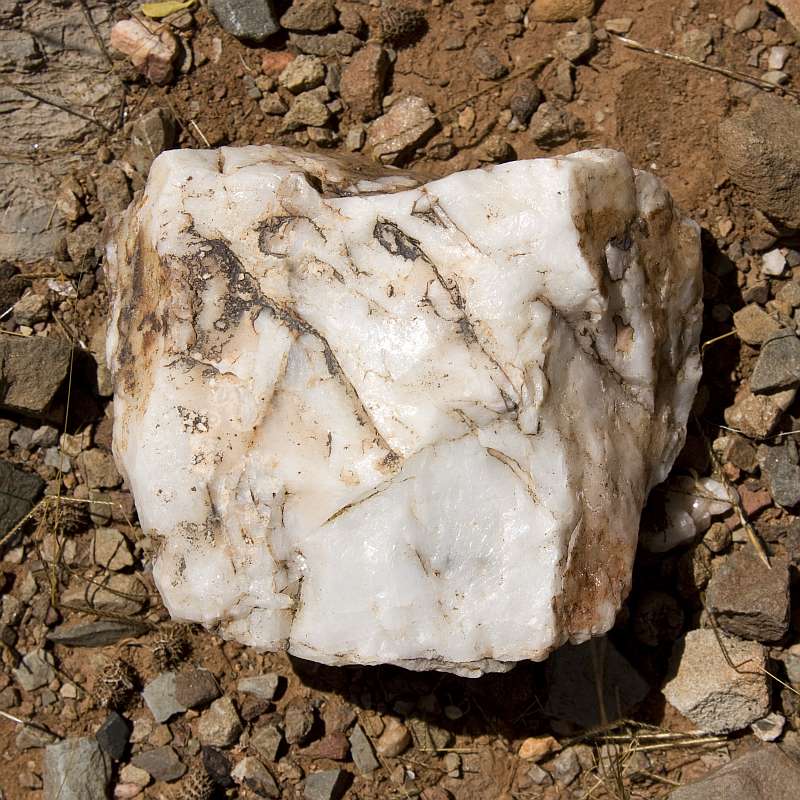
This mineral in hydrothermal veins is usually massive and white in color. It is called milky quartz. The white color is given by numerous minute fluid inclusions. Width of sample 9 cm. The sample is from Morocco (Anti-Atlas).
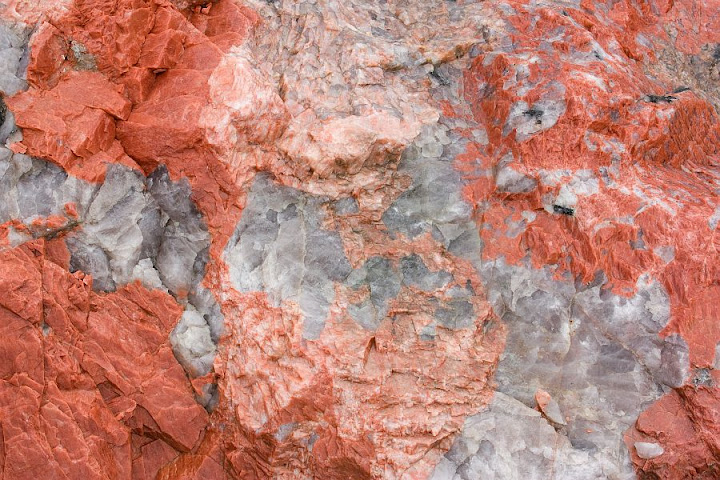
Large quartz (gray) crystals in alkali feldspar pegmatite. Nyelv, Norway. Width of view 50 cm.
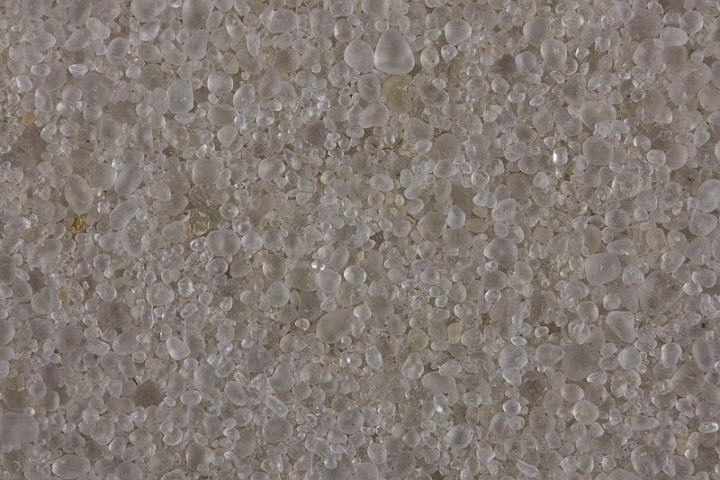
St. Peter Sandstone from the Ordovician Period is composed of almost pure and well-rounded quartz grains. Sand from this formation is widely used for fracking purposes. Width of view 20 mm.
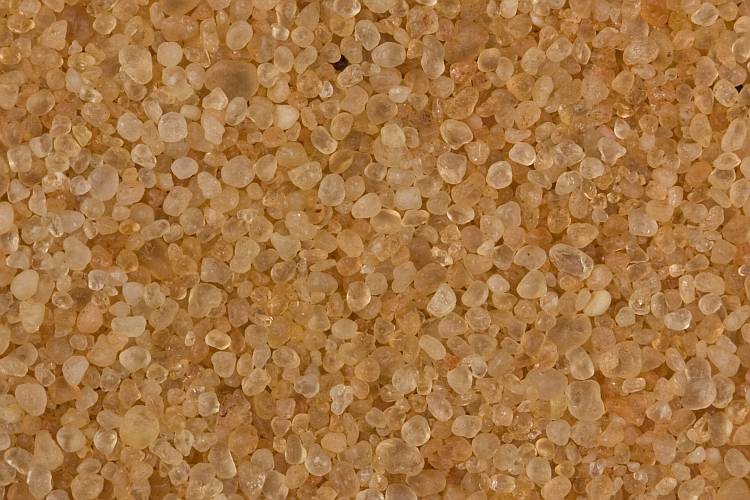
Eolian sand from the Sahara (Erg Murzuk, Libya) is also composed of almost pure quartz. Grains have an orange hue because of very fine-grained hematitic pigment that covers them. Width of view 15 mm.
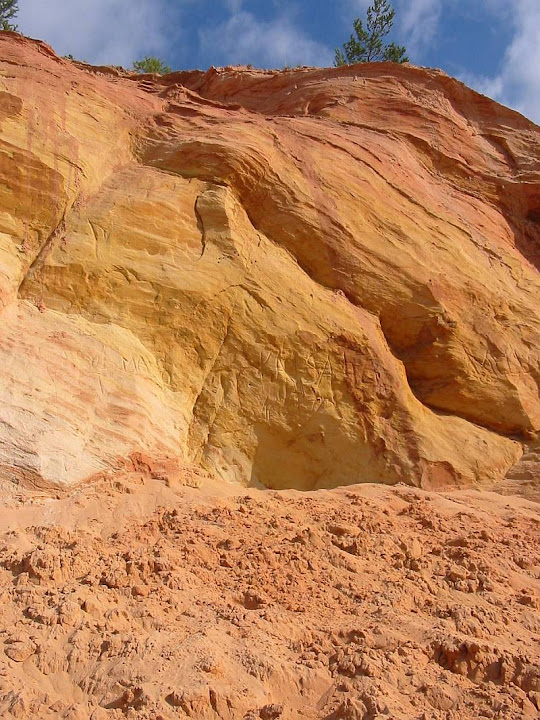
Weakly cemented Devonian sandstone outcrop in Estonia.
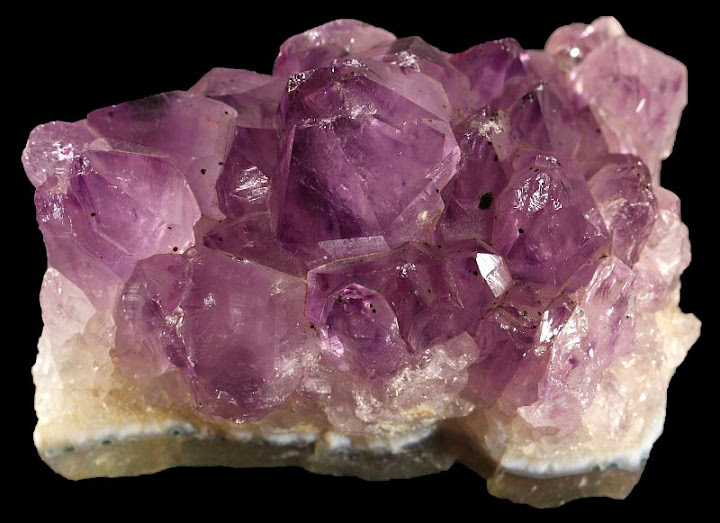
Amethyst is a violet variety of quartz. Width of the crystal 55 mm.
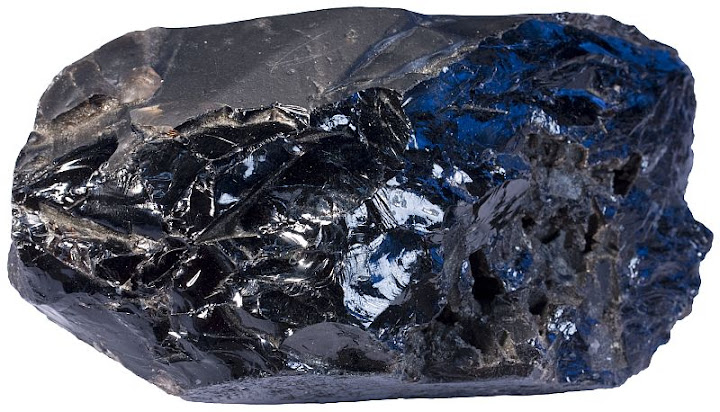
Morion is a black variety of smoky quartz. This morion crystal is 12 cm in length and shows typical fracture of quartz.
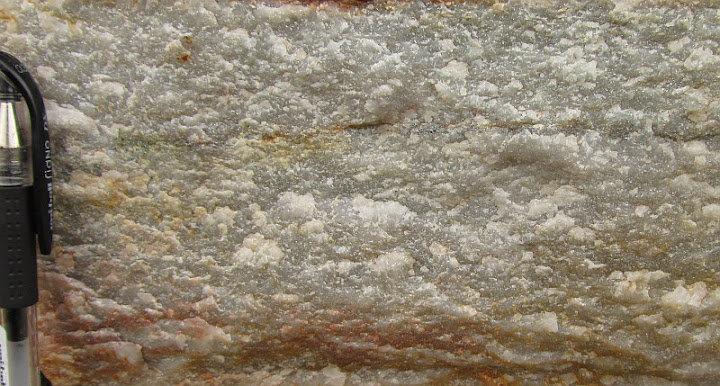
Metamorphosed sandstone is named quartzite. It is composed of strongly fused quartz. Sample from Ireland.
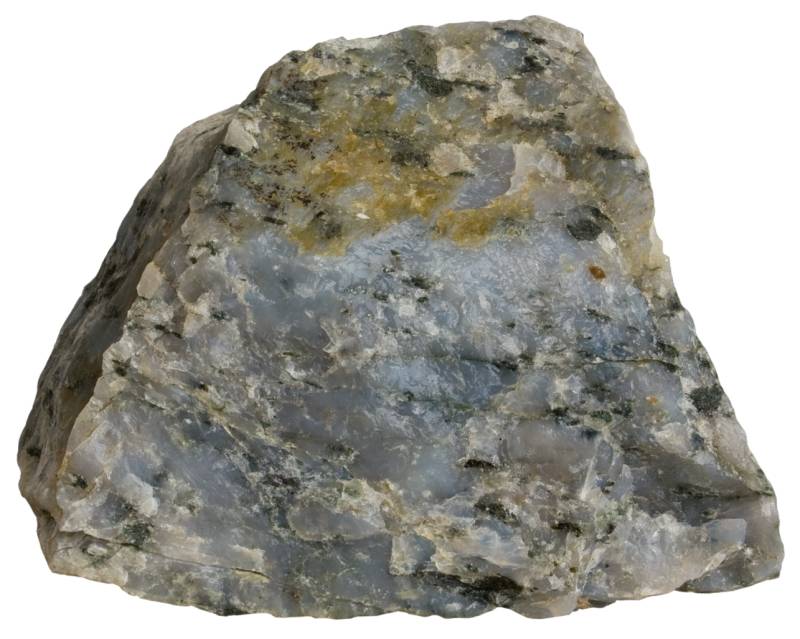
Blue color in quartz is usually caused by fine rutile crystals. Bergen, Norway. Width of sample 6 cm.
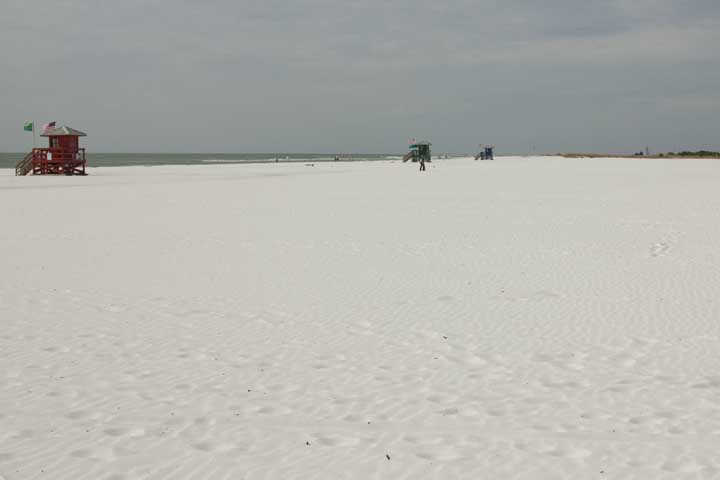
It is almost the sole component of Siesta Key beach sand in Florida.
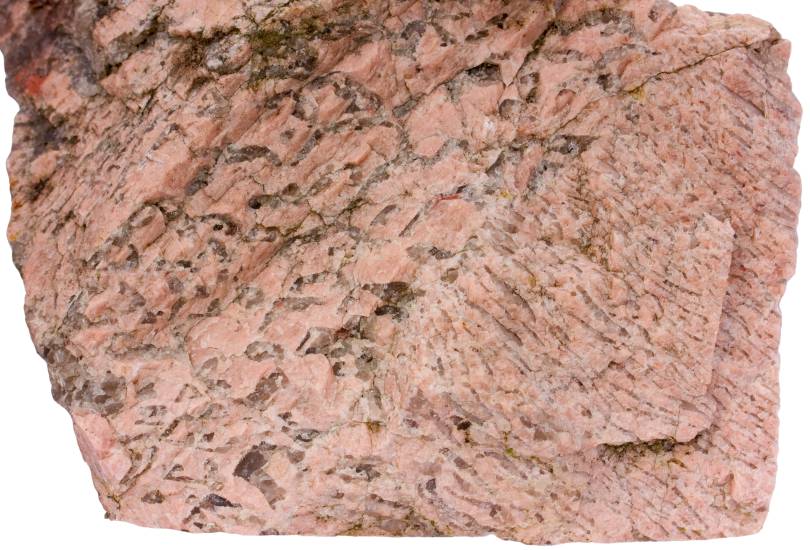
Quartz (gray) forming an intergrowth in alkali feldspar crystal in a pegmetitic igneous rock (graphic granite). The sample is from Southern Norway. Width of view 14 cm.
Leave a Reply