Ooids are small rounded accretionary mineralized bodies. They could be called sand grains, but they are no ordinary sand grains. Just like normal sand grains, ooids have a diameter reaching up to 2 mm (usually less than 1 mm). Larger grains formed the same manner as ooids are called pisoids (just like sand grains larger than 2 mm are called granules). Rock type composed of ooids is oolite.
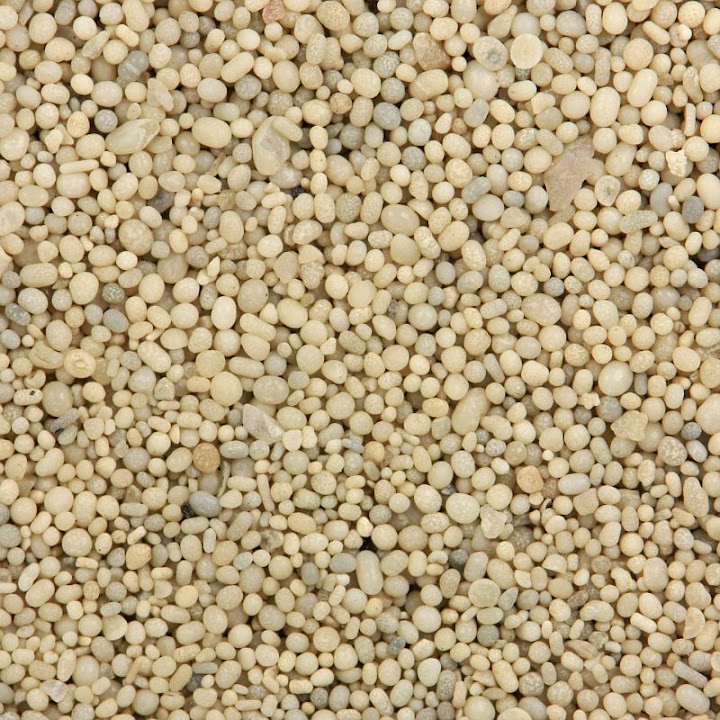
Ooid sand from the Antelope Island, the Great Salt Lake. Width of view 5 mm.
Ooids are accretionary — it means that they have grown to the size they have now. Sand grains have usually had just the opposite story — they were once larger. Ooids grow in shallow wave-agitated water. Waves move fine sediment particles (quartz grains or biogenic fragments) which act as a crystallisation nuclei upon which mineralized matter starts to grow.
Most ooids are calcitic or aragonitic. They have a characteristic concentric layering which resembles the growth rings of trees. Most ooids have rounded morphology, but some are elongated or even tabular, reflecting usually the shape of the crystallization nucleus.
Ooids are usually marine. Well-known locations where ooid sands are forming are the Persian Gulf, the Gulf of Mexico near the Yucatán Peninsula and the Bahama platform. Non-marine ooid sands exist also in some saline and freshwater lakes, caliche soils, caves, and even in some rivers. A famous example of non-marine ooid sand is on the shores of the Great Salt Lake in Utah.
Ooids form in a wave-agitated water, which is usually warm. Why is it important? Agitation by waves matters because forming ooids need to be in motion to make them grow evenly on all sides. Increased water temperature leads to a loss of carbon dioxide (warmer water can hold a smaller amount of dissolved gases) and therefore enhances the precipitation of calcium carbonate which crystallises as mineral calcite or aragonite.
There is a long-held understanding that calcitic ooids were once aragonitic, but recent studies show that it is not necessarily true. Primary calcitic ooids do exist and some periods in the geologic past have even favored their formation. Sometimes original calcium carbonate has been replaced by hematite, silica, or dolomite, but ooids composed of a primary phosphatic composition or primary iron oxides exist as well. More about this can be found here: oolite.
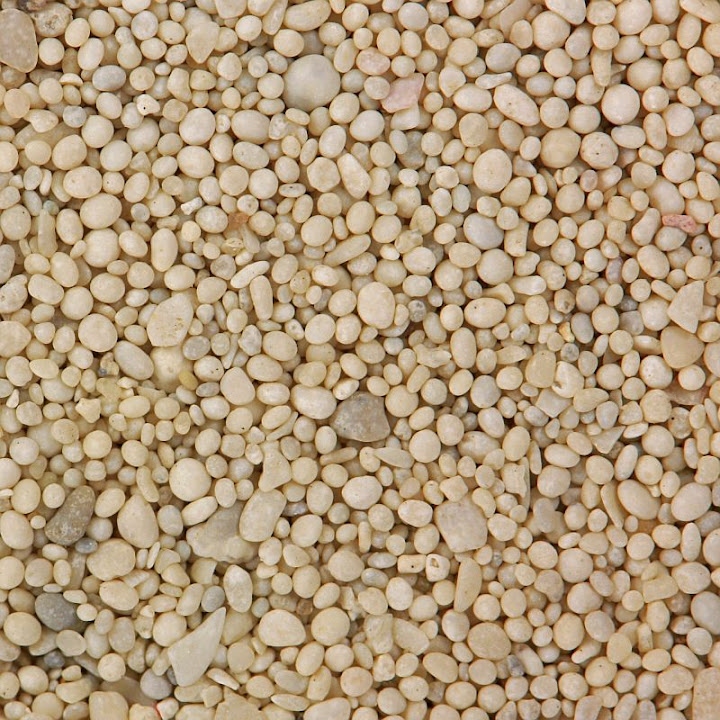
Ooid sand from Abu Dhabi, United Arab Emirates. Width of view 5.5 mm.
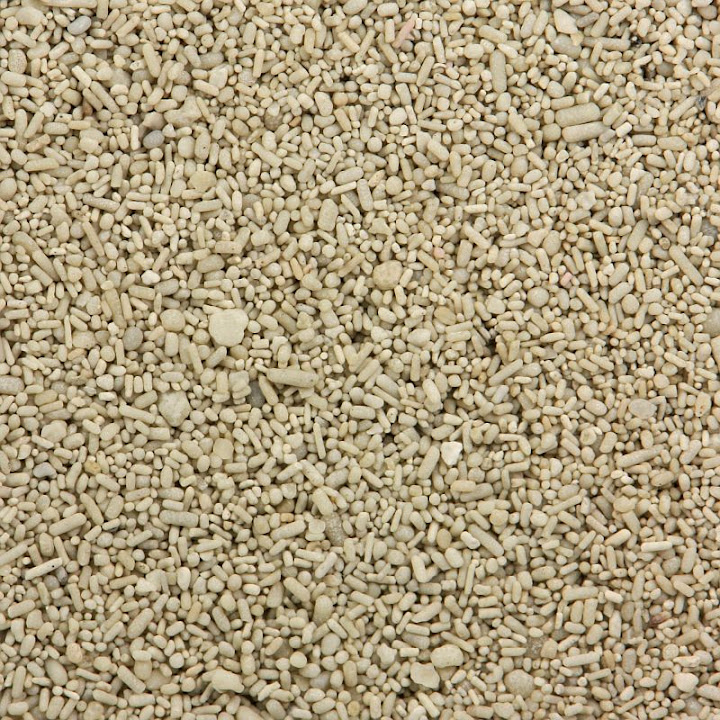
Ooid sand from Stansbury Island, The Great Salt Lake. Width of view 5.5 mm.
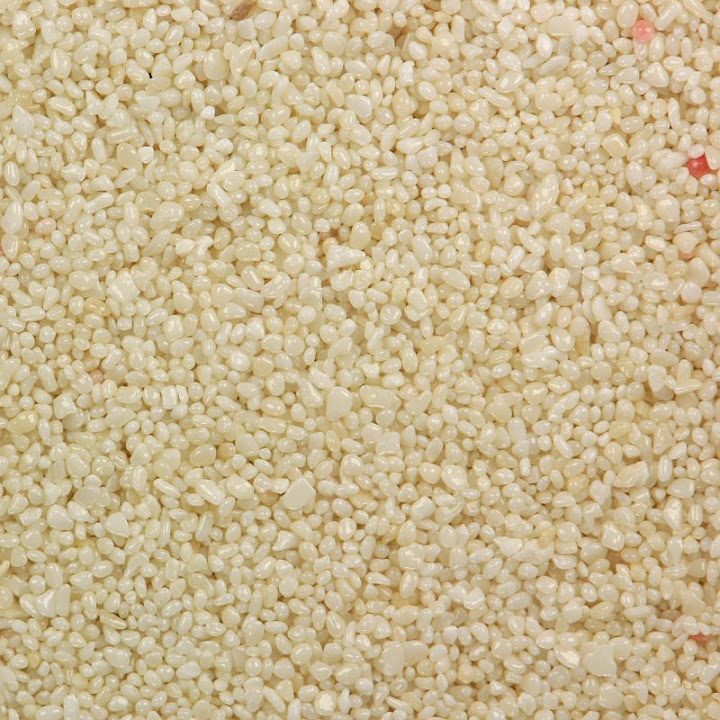
Ooid sand from Cancún, Yucatán, Mexico. Width of view 5 mm.
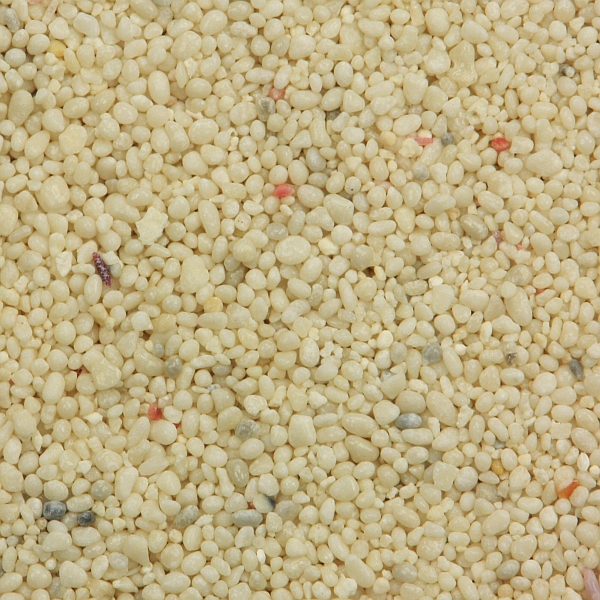
Ooid sand from Bahama. Width of view 10 mm.
Leave a Reply