Wollastonite (CaSiO3) is a silicate mineral that occurs in metamorphosed carbonate rocks. This mineral belongs to a group of chain silicates named pyroxenoids. These are minerals that are similar to pyroxenes but their crystal chains are distorted (not straight). Compared to pyroxenes, these minerals are rare.
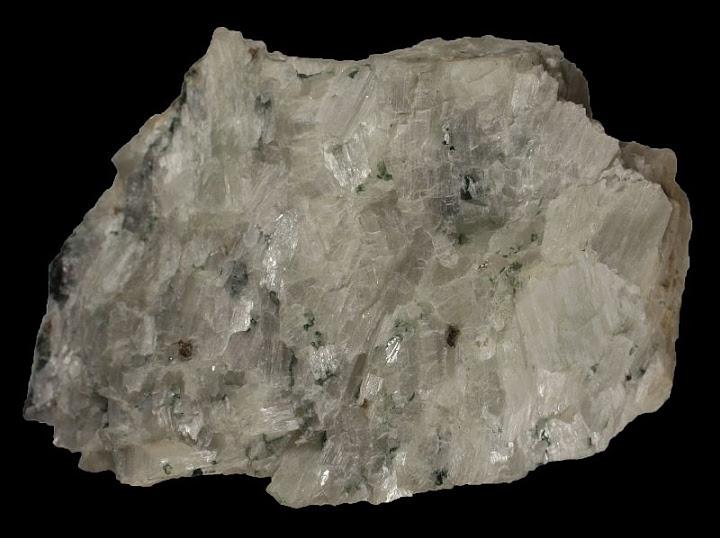
Wollastonite with diopside (green) from a mine in Willsboro, New York State, USA. Width of rock 8 cm. TUG 1608-1654.
There are only three common minerals among pyroxenoids (wollastonite, rhodonite, and pectolite) but even these are found in few rock types that are not very voluminous. Wollastonite as a most important of these minerals occurs only in a handful of places where it is abundant enough to make mining worthwhile. One of them is Willsboro in New York State (two photos below).
It forms when limestone reacts with silicate fluids:
CaCO3 (calcite) + SiO2 (quartz) → CaSiO3 (wollastonite) + CO2 (carbon dioxide)
Wollastonite may form when impure (contains silica) limestone (or dolostone) gets buried deep enough for the necessary metamorphic reactions to take place (regional metamorphism) or when magmatic fluids intrude the limestone body (metasomatism which produces skarns). In either case many other minerals may form as well. Diopside, calcite, dolomite, tremolite, andradite, grossular, plagioclase, epidote, vesuvianite, etc. may be associated with wollastonite. It may be very rarely found in some igneous rocks.
Pure mineral is white. It is usually relatively pure and therefore white but gray and light green colors are common also. It is typically fibrous, columnar, or bladed. It may be very similar to tremolite (amphibole group mineral). Unfortunately, these two love to occur together which complicates the identification process. Tremolite is light green (but usually darker) in color and forms columnar or acicular crystals.
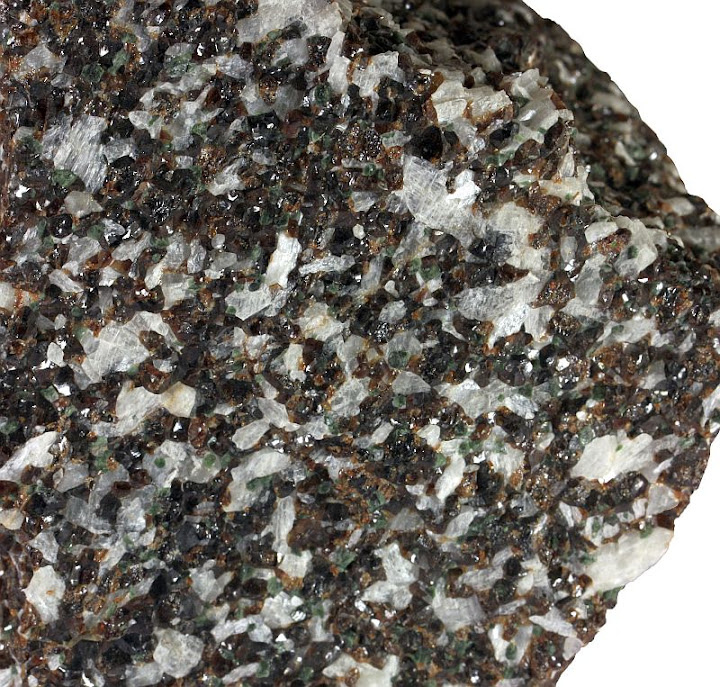
Calc-silicate minerals diopside (green), andradite (brown), and wollastonite (white) in a skarn from a mine in Willsboro, New York State, USA. Width of view 5 cm. TUG 1608-4877.
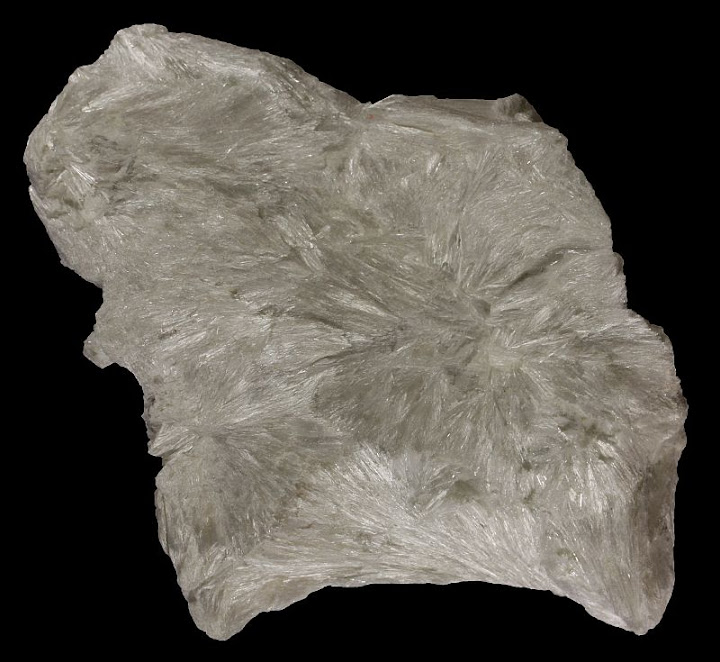
A sample from Lahore, Pakistan. Width of specimen 8 cm. TUG 1608-1675.
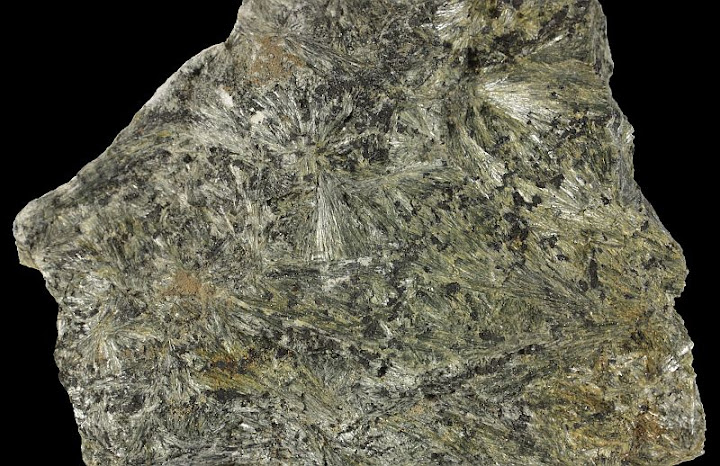
Wollastonite, tremolite (green), and actinolite (black) from Bastnäs, Sweden. Width of specimen 9 cm.
Leave a Reply