Dunite is an ultramafic plutonic rock that is composed almost exclusively of olivine. “Ultramafic” means that mafic minerals form more than 90% on the rocks composition. Most common mafic minerals in ultramafic rocks are definitely pyroxenes and olivine (if hornblende is present it is added to pyroxenes). Rocks that contain more than 40% olivine are peridotites. Note that this 40% means 40% of olivine-pyroxene(hornblende) pair, all other minerals are excluded in current classification scheme. Peridotite that contains more than 90% olivine have a special name, they are called dunite (named in 1864 after Dun mountain in New Zealand).
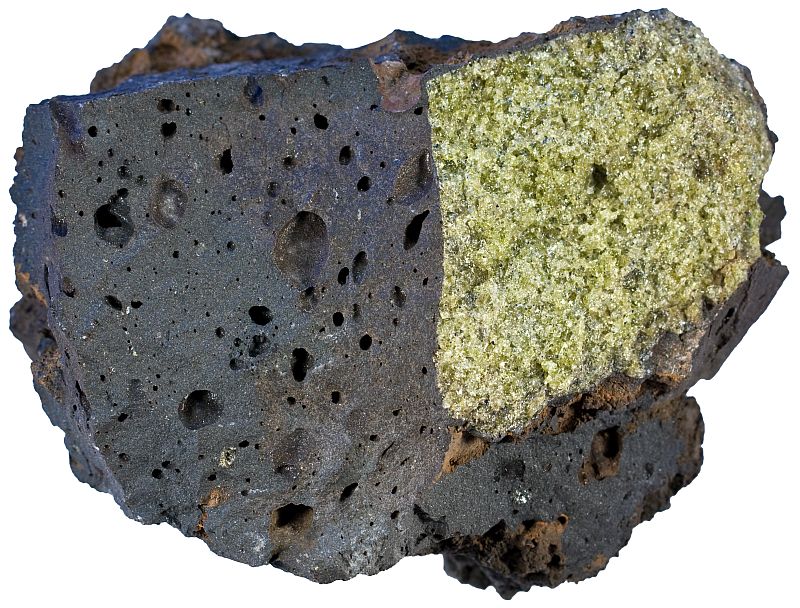
Dunite xenolith in basaltic lava from Hawaii. The sample is 8 cm in width.
‘Plutonic’ means that the rock is not volcanic, it didn’t form at or near the surface. In the case of dunite the formation place was probably very deep in the mantle. That’s why it is so rare on the surface. This rock type is rare, but it is pretty. However, its beauty is not the reason to reserve a separate rock name for it. It is an important rock type because it is probably very common in the mantle.
Dunite is mostly composed of olivine which is a bright green mineral. Fresh rock is green as well. However, olivine readily alters and loses its bright green color pretty quickly. Chances are very high that on the way up in the crust olivine grains lost some of its brightness. Hence, many samples look dull yellow, not green anymore. This rock usually contains chromite (Mg-bearing spinel group mineral). However, if the most common spinel mineral is magnetite, dunite is named olivinite instead.
Magnesium is a very common chemical element in the mantle. So we should expect to see lots of unusual mineral varieties in dunite. I already mentioned chromite, but Mg-bearing garnet pyrope is quite common as well. If the sample contains significant amount of garnet, then it should be added to its name.
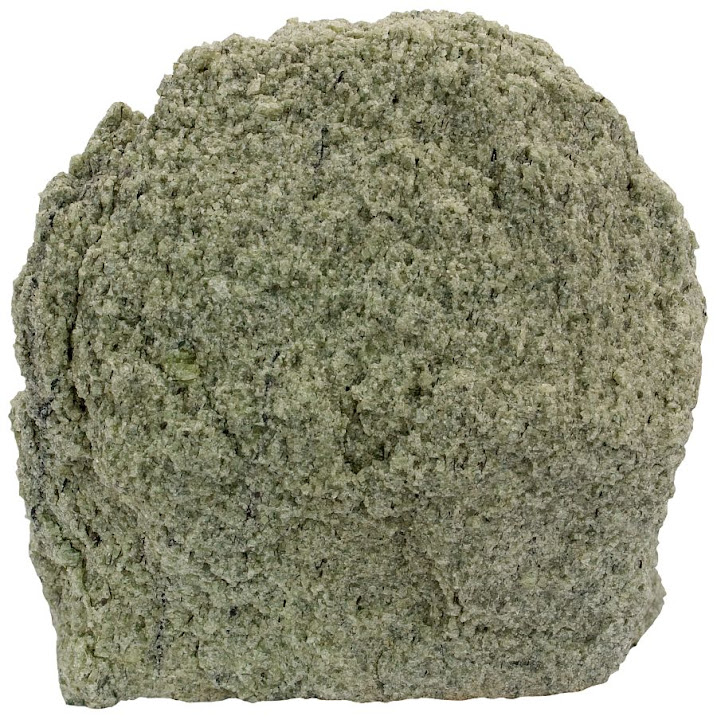
A sample from Norway which is mined because of its high olivine content. Olivine is used as a refractory material. Gusdal Quarry, Møre og Romsdal, Norway. Width of sample 9 cm.
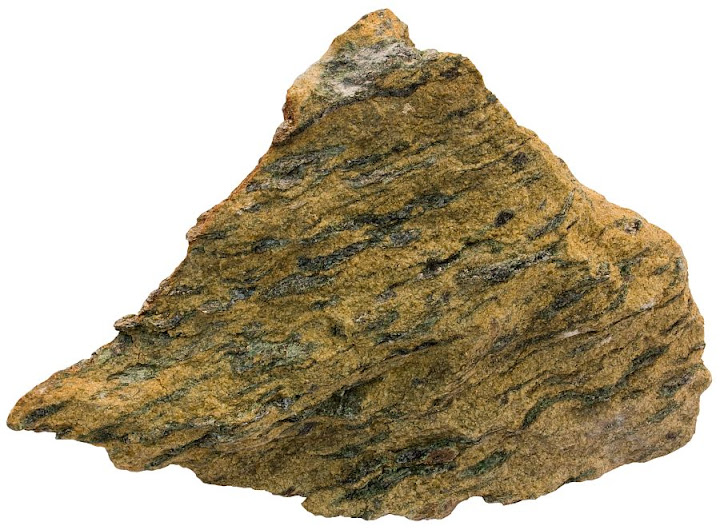
Weathered sample with chlorite. Width of sample 14 cm. Helgehornsvatnet, Norway.
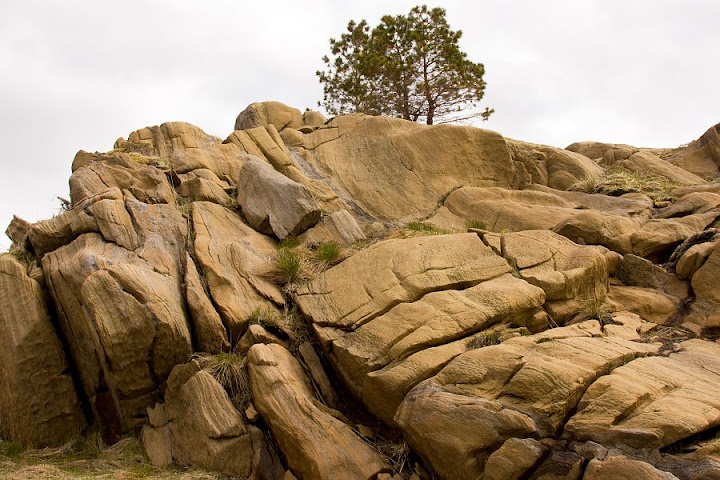
Outcrop of dunite in Norway. Dunite loses its green color rapidly when exposed to rain.
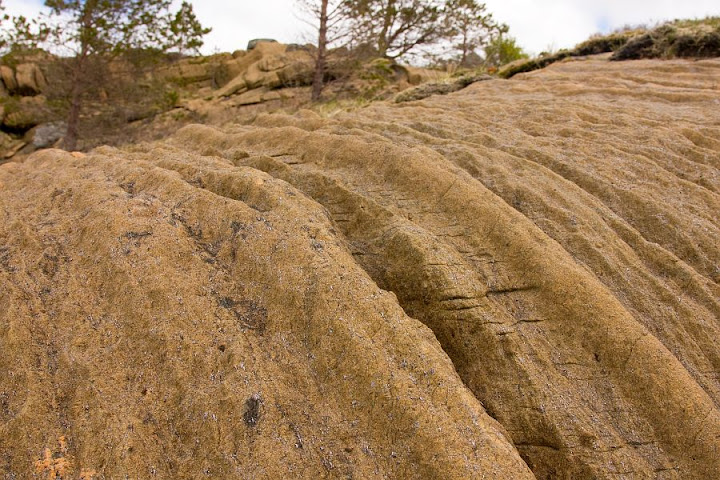
Grooves on the outcrop of dunite is a result of rain-induced weathering.
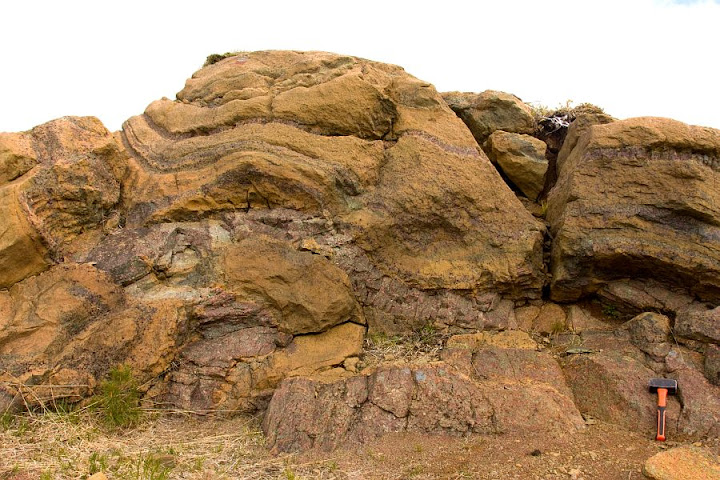
Outcrop of dunite with layers of pyroxenite (layered ultramafic intrusion). Helgehornsvatnet, Norway.
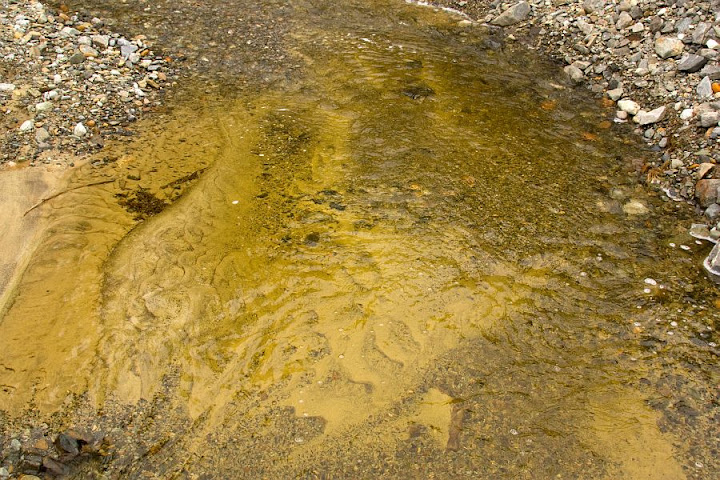
This greenish sand is composed of almost pure olivine and is a result of weathering of dunitic rocks. Gusdal quarry, Norway.
Just based on a visual estimate of the modal mineralogy I’d say this rock is a garnet lherzolite (or perhaps a garnet wherlite). There’s almost certainly more than 10% chromian diopside (the bright green CPX) visible, IMHO. That doesn’t take anything away from what a stunning rock this is. I’d love to collect a piece of this Alpe Arami peridotite for teaching purposes, as it’s a type example of “fertile mantle”. If you need a photo of a piece of true dunite I can offer this weathered example (with chromite seams): http://www.flickr.com/photos/rschott/4579356243/in/set-72157623033417595 and if you want a fresher example, how about: http://ron.outcrop.org/images/IMG_1117.JPG
Yes, it is likely. This rock sample doesn’t belong to me. I took that photo few days ago but I can not examine the sample at the moment. This rock belongs to my university. It was collected by an amateur geologist who just gave his whole collection (7 tons of rocks!) away few years before he passed away (I will write a post about him soon). There are many wonderful samples but unfortunately they are mostly poorly described or not at all. I am destined to make lots of mistakes but I hope that fellow geologists help when they spot possible errors. I am currently taking photos of these samples. This is huge amount of work and I really do not spend much time to study them in detail. I just take the samples out of plastic bags where they are stored, take photos of the best samples and quickly move on. I think your interpretation is probably true. This is only good because I really do not have a photo of lherzolite yet 🙂 I will add your picture of fresh dunite to the article also.
Im interested in ultarabasic rocks specially dunite bearing chromite,your samples very nice
Interesting. But how does olivine used as refractory materials. Please enlighten me on this.
Olivine is frequently used as a foundry sand.