Leucoxene is an alteration product of titanium-bearing minerals. Leucoxene is not a mineral because it lacks defined crystal structure and its chemical composition is far too variable to be expressed as a chemical formula. It is an alteration product of minerals like ilmenite, rutile, and titanite (sphene).
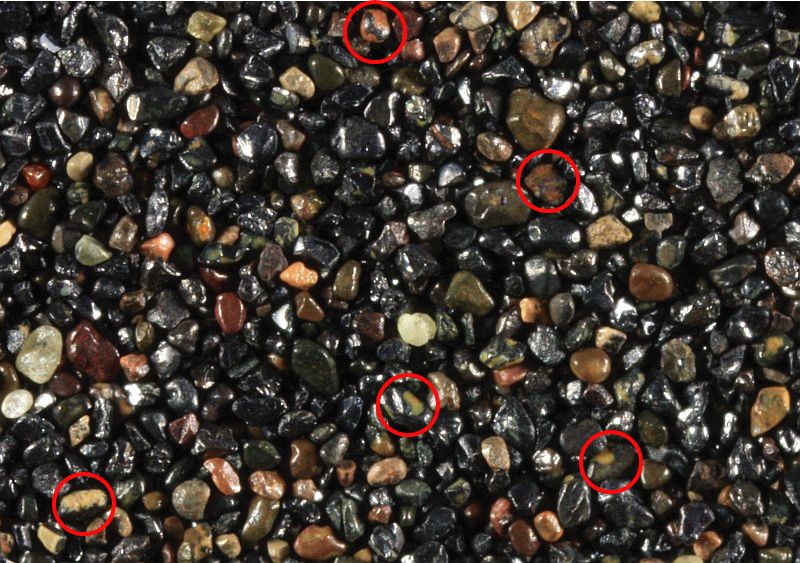
Some ilmenite grains demonstrate half-completed leucoxenisation process (few examples are annotated). The width of the view is 3.8 mm.
Other minerals often present are pseudorutile, anatase, hematite, and goethite1. The color of the material is variable. It may be light gray, brown, yellow, orange, reddish, etc. It looks earthy because it is a mixture and therefore never forms beautiful crystals. It is an economic mineral mined for its titanium content. It is usually mined together with ilmenite.
There are black ilmenite and colorful leucoxene grains on the picture below. The width of the view is less than 4 mm, so the grains are really small and indistinguishabe to the naked eye. The picture shows leucoxene grains in different shades of color and some grains demonstrate the leucoxenisation process being halfway completed.
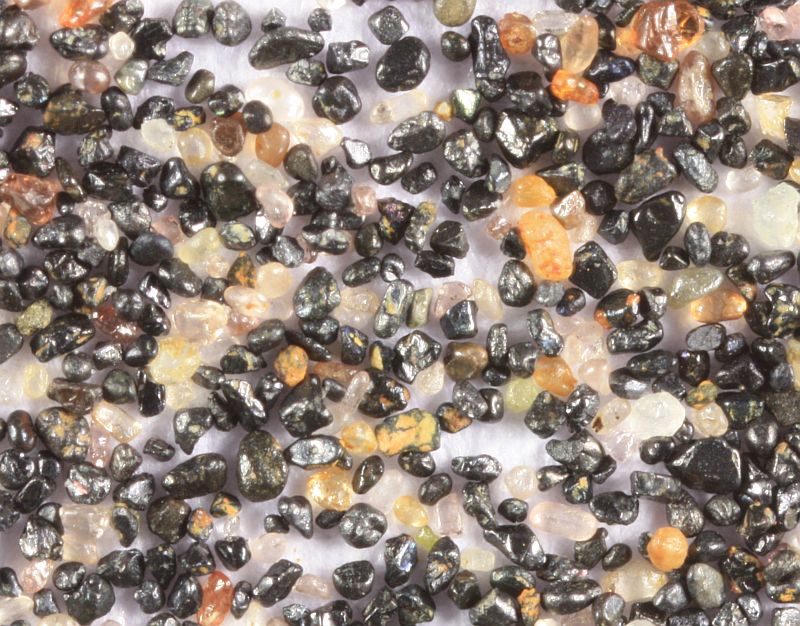
Beach sand containing ilmenite (black), leucoxene (yellow spots on ilmenite grains), quartz, almandine, and zircon. Calvert Cliffs State Park, Soloman Islands, Maryland.
References
1. Deer, W. A., Howie, R. A. & Zussman, J. (1996). An Introduction to the Rock-Forming Minerals
Leave a Reply