Black sand is sand that is black in color. It seems to be very simple. But what is behind this concept? How is this type of sand formed? What is it made of? There is no single and easy answer to these questions because there are a number of different dark sand grains that can form black sand and hence there are several different ways how black sand can form.
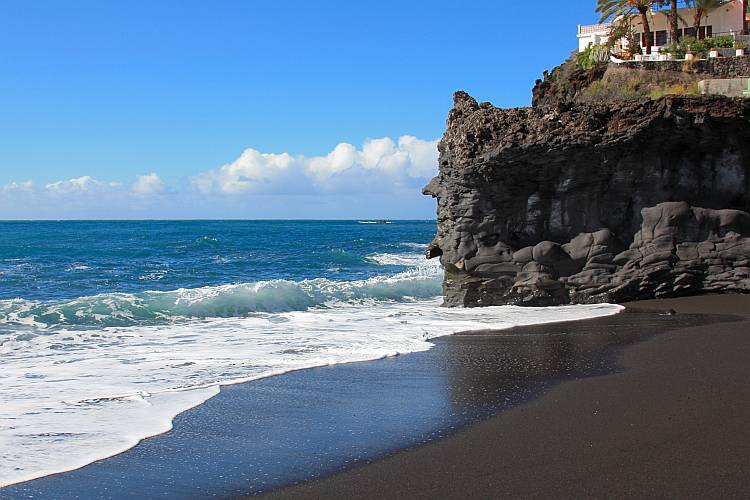
Black sand on a volcanically active oceanic island. Puerto Naos, La Palma, Canary Islands.
The realm of black sands can be broadly divided into two parts, both of them having subdivisions. The most widespread type of black sand is composed of volcanic minerals and lava fragments. Such sands are especially common on the coasts of volcanic islands (Hawai’i, the Canary Islands, the Aleutians, etc.).
Black sand beaches are black because many volcanic minerals and rocks are dark-colored. Common rock types of volcanic islands are basalt (black when fresh), andesite (usually dark gray) and volcanic glass (often black in color). The minerals that give black color to these rocks are predominantly pyroxenes (mostly augite), amphiboles (mostly hornblende) and iron oxides (mostly magnetite). Such sands are heavier than ‘normal’ light-colored sands and become very hot on a sunny day. Dark color and heavyness are both caused by high iron content. Iron gives black color to most minerals because it absorbs light very well and it is also heavy.
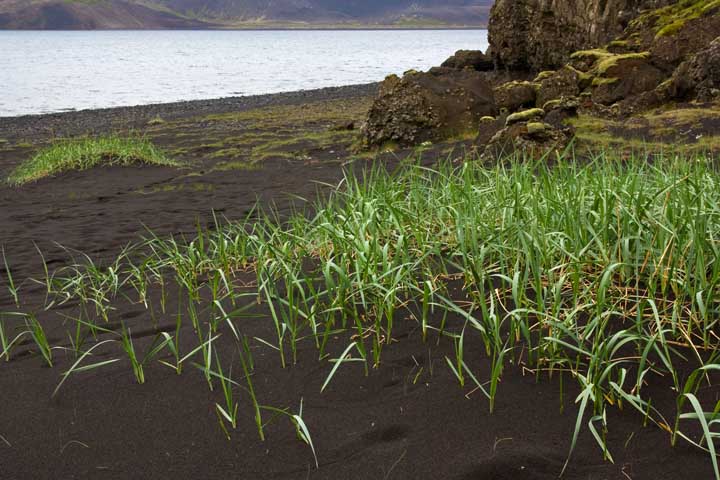
Black volcanic sand on the Reykjanes Peninsula in Iceland.
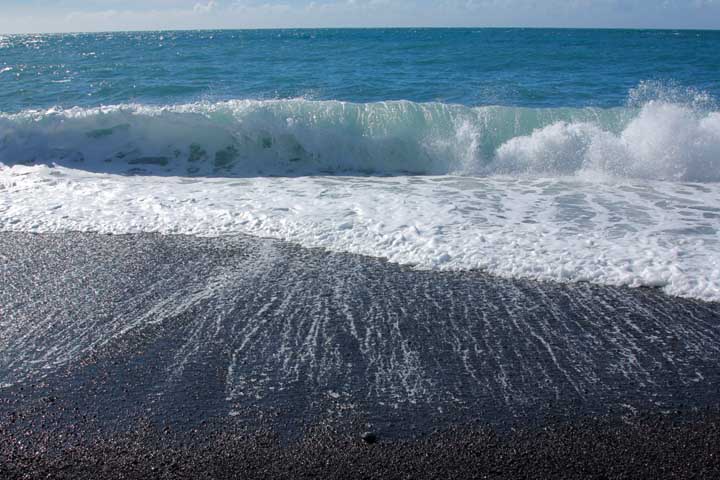
Black sand on the western coast of La Palma, Canary Islands.
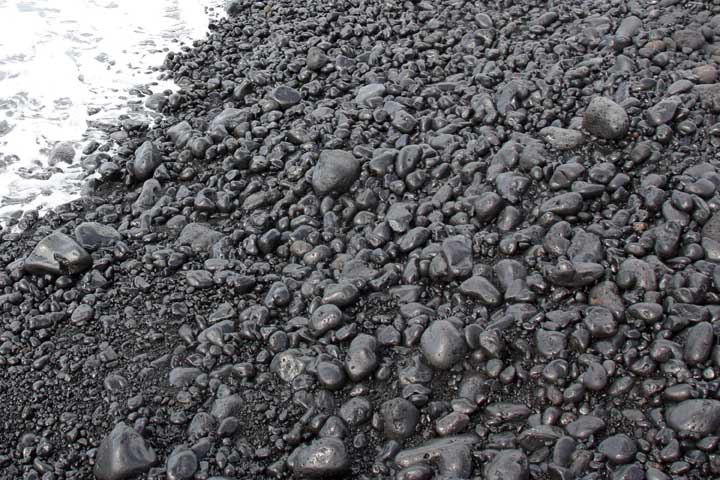
Basalt is the most common source rock of black sand. Photo taken near the southern tip of La Palma.
Black volcanic sands may contain many non-black grains like green olivine crystals, reddish (usually because of weathering) volcanic rocks, light-colored quartz (when the source area is continental) and carbonate biogenic grains (coral sand). Most volcanic minerals are not very stable. They decompose pretty rapidly. These sands are said to be compositionally immature (mature sands are composed of quartz and other minerals very resistant to weathering). They also contain unusally high content of lithic (rock) fragments which have not broken up yet to form a sand composed of individual mineral grains.
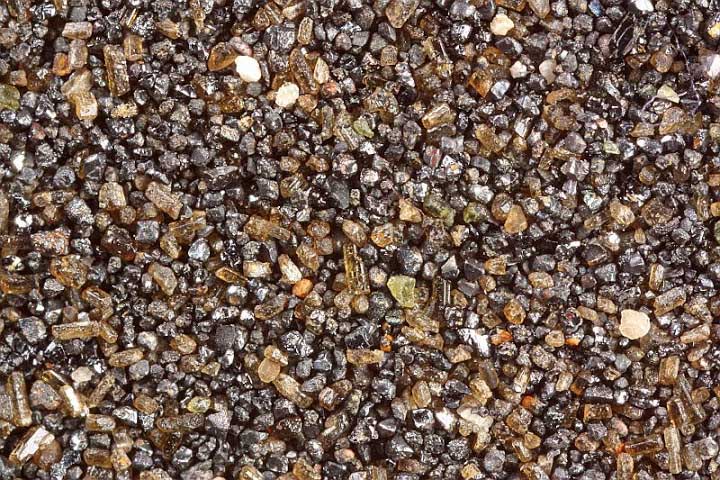
Fine-grained volcanic beach sand from Martinique. Green prismatic mineral is augite. Black is magnetite. Width of view 7 mm.
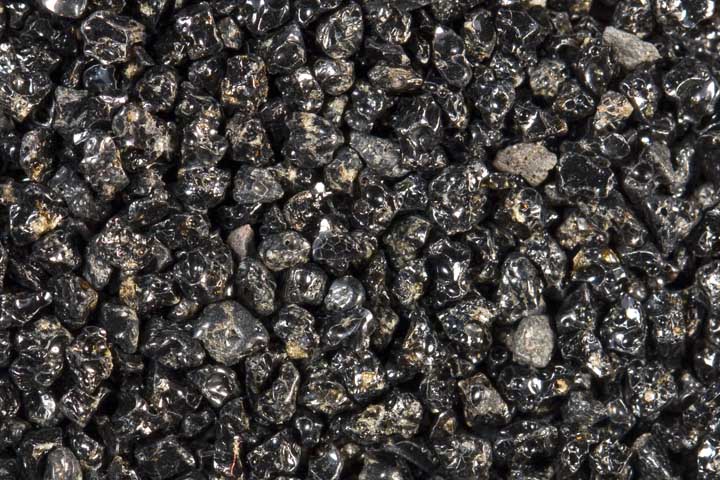
Black beach sand composed of volcanic glass. Punalu’u Beach in Hawai’i.
Another type of black sand occurs mostly in continental settings. It is heavy mineral sand. Heavy minerals are minerals which have a specific gravity above 2.9. There are almost all colors present among the heavy minerals but they seem to be dark compared to usually light-colored quartzose sand. Heavy mineral sands are usually composed of minerals that are relatively resistant to weathering. Such minerals are tourmaline, magnetite, garnet, rutile, ilmenite, zircon, epidote, staurolite, etc. Heavy minerals are in most cases disseminated among the light-colored (and usually much larger) quartz grains but in certain conditions they tend to accumulate.
You probably have seen dark stripes on a sandy beach which may even be mistaken for an oil pollution. These streaks are composed of tiny gems that were carried high on the beach either by big waves or streams but they successfully managed to avoid flowing back with the receding waves because of their above average density. The most common heavy minerals forming black sands are perhaps magnetite, garnet and epidote. They are widespread enough in the rocks and resist weathering moderately well. They are more resistant than typical minerals of volcanic black sands (olivine, pyroxene, hornblende) but not as resistant as rutile, tourmaline, and zircon. But the latter three never make up the bulk of rocks and therefore are rarely very concentrated in sand.
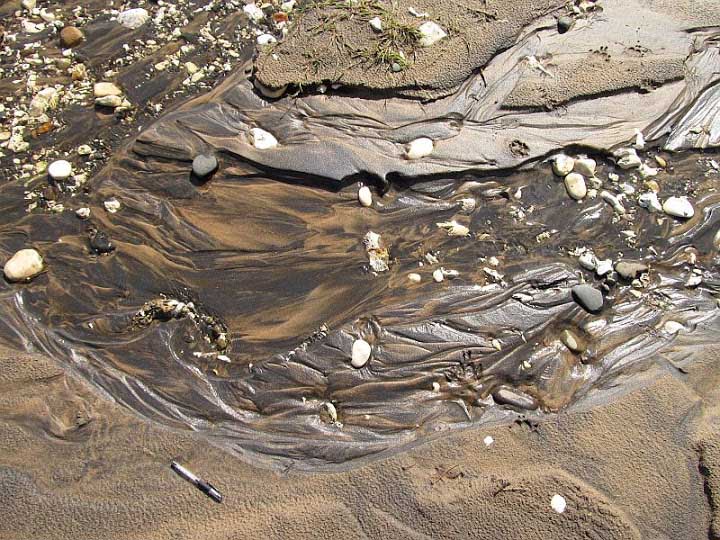
Heavy minerals forming black stripes in light-colored sand. White Park Bay, Northern Ireland.
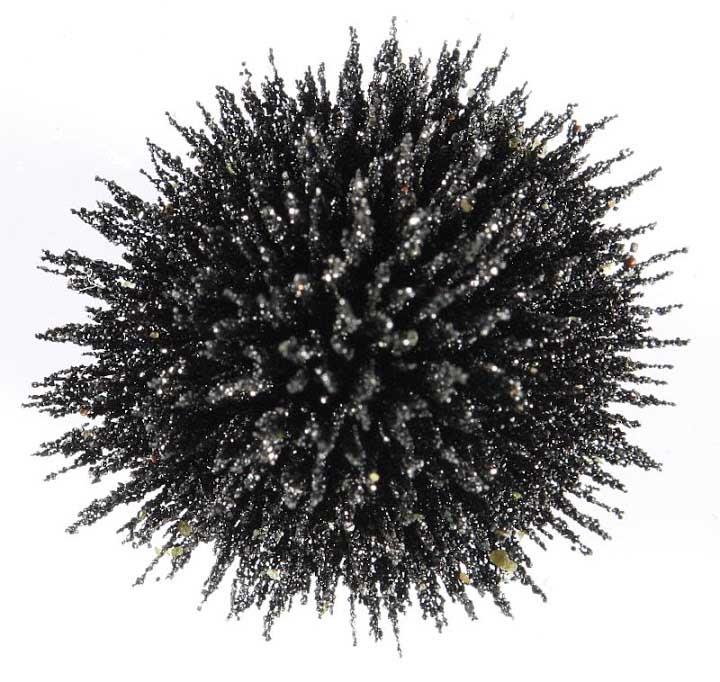
Magnetite grains in the presence of a strong external magnetic field. There is a neodymium magnet placed beneath the sample. Magnetite crystals are from Talofofo Beach, Guam, USA. Width of view 10 mm.
Good stuff! Preparing a geological journey to Estonia June 2013 we’ll be in touch next winter.
Greetings
Piet Vierbergen
Piet, I’m looking forward to it.
Hello, I am interested in learning more about black sand, specifically the heavy black sand consisting of magnetite, garnet, and epidote. Are there any other sources that may have more information on this topic.
Darrell
Exceedingly useful for those who want to gain knowledge on soils and earth science. Hope these are updated periodically.Thanks.
It was a great little informational page about black sand and how it is formed .
from yours truly Michele Thunderman
Hi! I just want to ask if black sand is used on making solar cells? If yes, what mineral is needed for it? Thank you.
No, black sand is not used for that purpose. Solar industry needs silica as pure as possible which means that white quartz sand is the best choice.