Deserts cover huge areas, mostly between 10-30 degrees N and S of the equator. Many of these deserts are sandy, at least partly. Good example is Sahara — the largest desert in the world. To describe a desert sand, we first have to make clear what we are talking about. When we imagine desert sand, we probably think of sand dunes. That is what I am writing about here although dune fields cover only about 20 percent of modern desert areas.
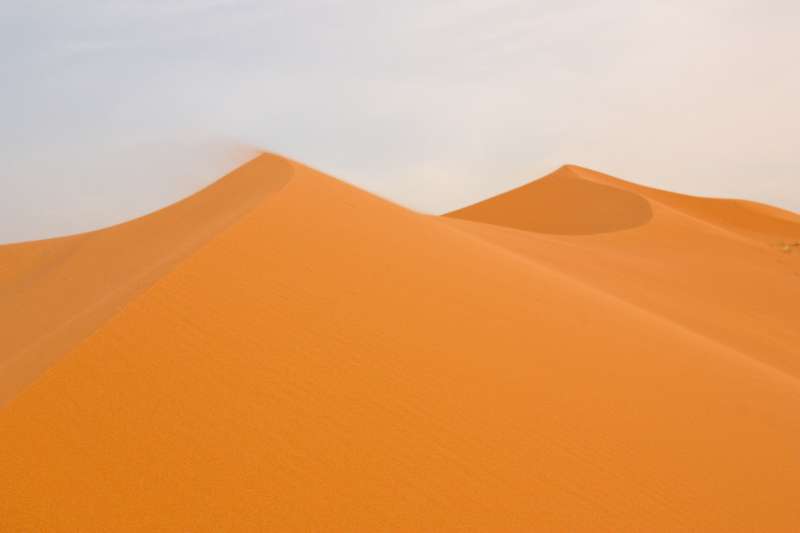
Sand dune in Sahara (Morocco). Note how wind is blowing sand grains off the crest of the dune.
Dune sand is generally very well-sorted. It means that all the sand grains are roughly the same size. There is almost no dust. It is blown away and deposited elsewhere, possibly as a loess deposit far away from the source area. There are also no gravel or boulders because wind is not capable of carrying such a heavy load.
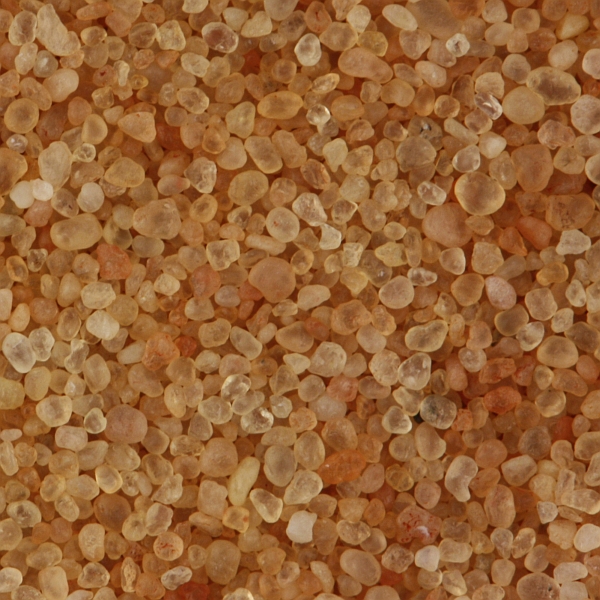
Desert sand composed almost exclusively of rounded quartz grains. Sand sample is from the Sahara Desert (Erg Murzuk), Libya. Width of view 1 cm.
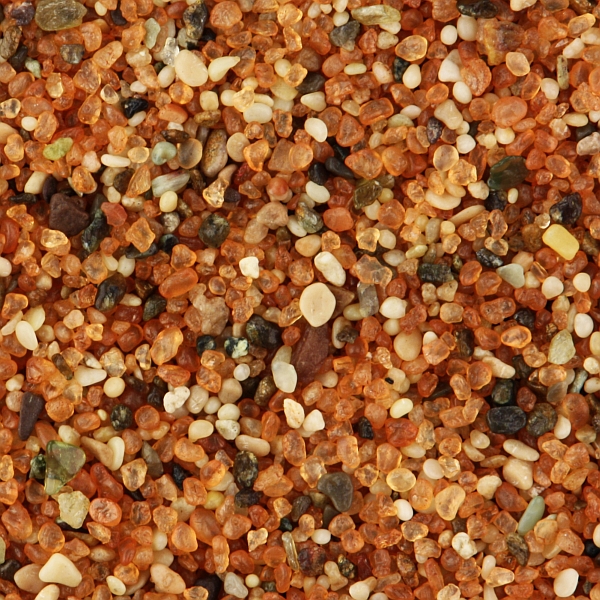
Rounded quartz grains (covered with rust-colored hematitic pigment) plus biogenic and lithic fragments from the Dubai Desert, United Arab Emirates. Biogenic grains clearly indicate that the sea can’t be very far away.
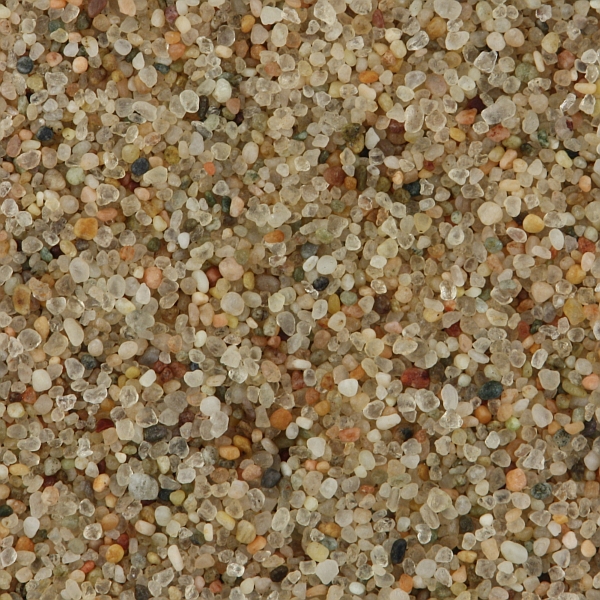
Dune sand from the Gobi Desert, Mongolia. Width of view 1 cm.
Dear sand atlas, I was wondering if Gobi sand is silica sand. I am interested in glass art and I am a Mongolian myself. If the sand could not be used in glass making, what could it be used for? Thank you very much