Sand composed almost exclusively of olivine grains is rare. Olivine is a common rock-forming mineral of certain igneous rocks but it is very unstable under the atmospheric conditions and will therefore decay quickly. The most famous example of olivine sand is Papakolea Beach near the southern tip of Hawaii Island (Big Island) but it is not the only one: Is Papakolea the only green beach.
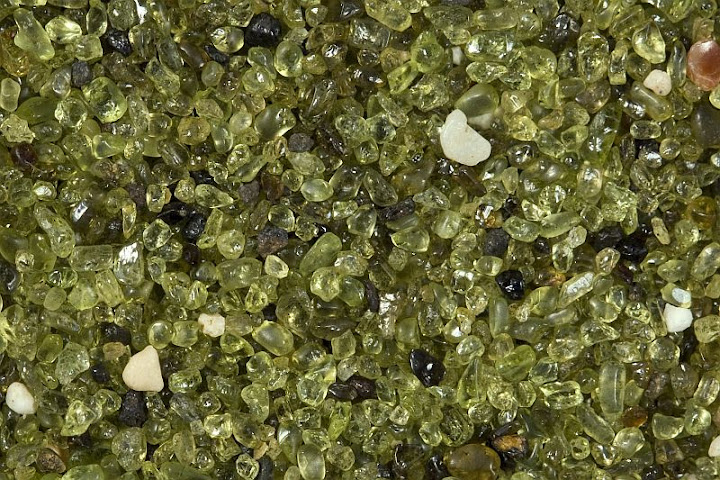
Olivine sand from Hawai’i (Big Island). Olivine is green. White grains are biogenic in origin. The source of olivine there is a cinder cone that is constantly pounded by the waves. Width of view is 20 mm.
Beach sand containing olivine is not rare in volcanic regions. Olivine is significantly denser than other common silicate minerals. This difference in density allows waves to separate olivine from the rest and concentrate it on the beach in certain conditions.
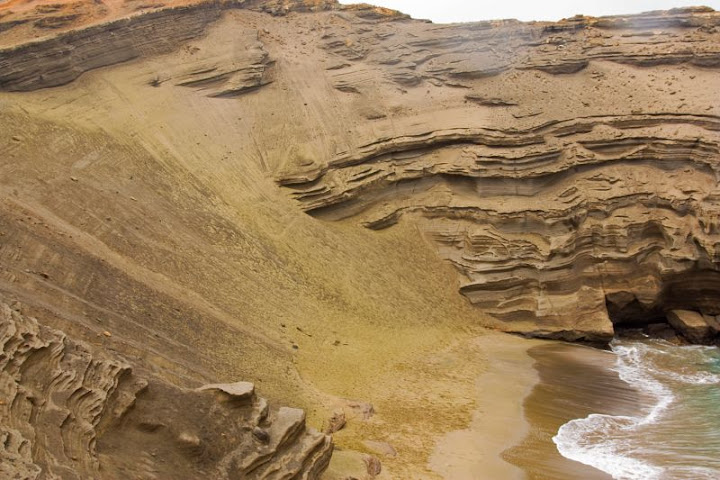
Green sand beach (Papakolea) in Hawai’i.
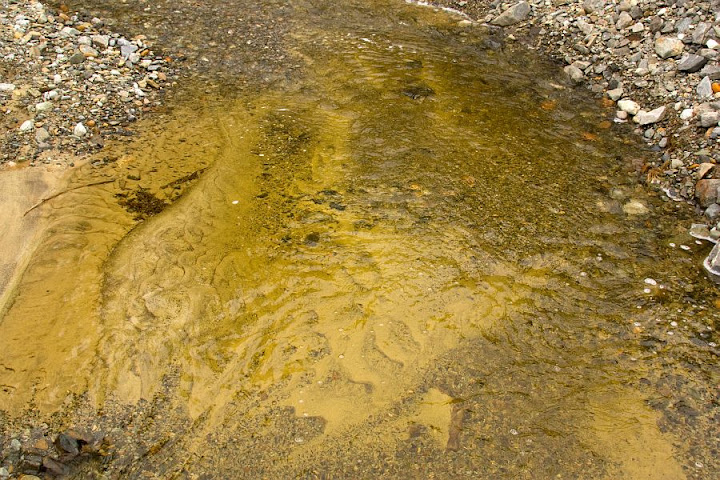
Olivine sand formed from dunite (monomineralic olivine-rock). Gusdal Quarry, Norway.